
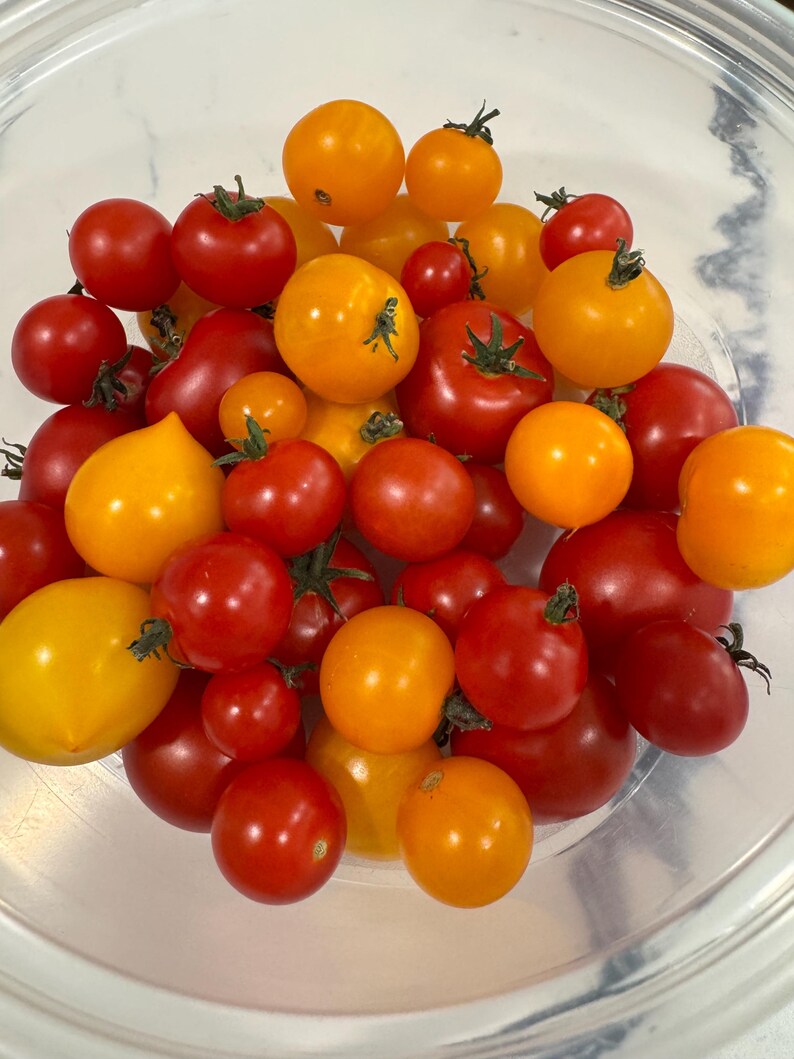
Description
Open-Pollinated – Self-Pollinating – Determinate – Micro-Dwarf
Hahms Gelbe, often spelled as “Halms Gelbe” and formally known as Hahms Gelbe Topftomate (which translates to “Hahm’s Yellow Pot Tomato”), is a compact, open-pollinated micro-dwarf cherry tomato. Originating in Germany, the variety is attributed to breeder Manfred Hahm, with seed-history records suggesting it was later introduced into wider circulation by Reinhard Kraft around 2007–2008. While it has become a favorite among container gardeners, a detailed, step-by-step breeding pedigree or parentage record is not publicly documented. As an open-pollinated variety, it is stable, meaning seeds saved from its fruit will produce offspring true to the parent plant.
Common Name: Hahms Gelbe Micro Dwarf Tomato (often referred to as Hahms Gelbe Topftomate)
Scientific Name: Solanum lycopersicum ‘Hahms Gelbe Topftomate’
Plant Type: warm-season annual; open-pollinating, self pollinated, determinates, micro, dwarf
Plant Details
- Plant Height: 15–30 cm / 6–12 in
- Plant Spread: 20–30 cm / 8–12 in
- Germination Period: 7–14 days
- Transplant Spacing: 30–45 cm / 12–18 in
- Row Spacing: 45–60 cm / 18–24 in
- Seed Sowing Depth: 0.5–1 cm / 0.25-0.5 in
- Days to Maturity: Approximately 50–65 days from transplanting
- Fruit Size: 2.5-4 cm / 1-1.5 in – 6-9 g / 0.2-0.3 oz
- Soil Type: Fertile, well-drained loam enriched with compost; ideal pH 6.0–6.8
- Sun Conditions: Full sun (6–8+ hours of direct sunlight daily)
- Ideal Container Size: 2-6 litres / 0.5-1.5 gallons
Growing Tips & Notes
Hahms Gelbe is perfectly suited for small-space gardening. Its micro-dwarf habit means it requires very little space, making it an excellent candidate for pots as small as 1–2 gallons, balcony boxes, or even sunny indoor window ledges.
- Light: Ensure it receives at least 6–8 hours of direct sunlight daily. In lower light conditions, it may require supplemental artificial lighting to stay compact and productive.
- Soil: Use a high-quality, well-draining potting mix. Because the container size is small, soil nutrients can deplete quickly; regular, light fertilization with a balanced, organic fertilizer is recommended during the active growing season.
- Watering: Containers dry out quickly. Check soil moisture daily and water when the top inch of soil feels dry. Consistent moisture is crucial to prevent blossom-end rot and cracking.
- Safety Note: As with all tomato plants, only the fruit is edible. The stems, leaves, and other foliage contain solanine, a glycoalkaloid that is toxic to humans and pets if ingested, and these parts should not be consumed.
Harvesting Time & Procedure
Hahms Gelbe is an early-season producer, typically ready for harvest about 60–70 days after transplanting.
- Procedure: Harvest the fruit when it has turned a uniform, bright yellow color and yields slightly to gentle pressure. Because the plants are delicate and compact, it is best to harvest by either carefully twisting the fruit off the vine or using small garden snips to cut the stem just above the calyx to avoid damaging the plant. Regular harvesting encourages the plant to maintain high fruit production throughout its season.
Various Uses
Hahms Gelbe offers a sweet, mild flavor profile that is highly enjoyable in a variety of culinary applications.
- Culinary Uses: These small, bite-sized tomatoes are ideal for fresh snacking directly from the plant. They are a vibrant addition to fresh garden salads, pasta dishes, and appetizer platters. Their bright yellow color adds a festive touch to salsas or roasted vegetable medleys.
- Medicinal Context: While not used as a primary medicinal plant, tomatoes contain lycopene (though levels are generally higher in red varieties) and other beneficial compounds like Vitamin C, Vitamin A, and various flavonoids that act as antioxidants, supporting general health and immune function. There are no specific medicinal uses for the fruit recognized in clinical practice.
Seed Processing & Storage
As an open-pollinated variety, saving seeds from Hahms Gelbe is a straightforward way to maintain your supply for future years.
- Processing:
- Selection: Choose fully ripe, healthy fruit from your most vigorous, productive plants.
- Extraction: Slice the tomatoes and squeeze the seeds and surrounding jelly-like pulp into a clean glass container.
- Fermentation: Add a splash of water, cover the container with a breathable material (cheesecloth or a paper towel), and let it sit in a warm spot away from direct sun for 2–4 days. This ferments away the germination-inhibiting gel.
- Cleaning: After 2–4 days, fill the container with water. Viable seeds will sink to the bottom, while pulp and debris will float. Gently pour off the floating material. Repeat this rinsing until the water is clear and only clean seeds remain at the bottom.
- Drying: Spread the seeds in a single layer on a glass surface or a ceramic plate to dry in a well-ventilated, shaded area. Do not use paper towels, as the seeds may stick to the fibers.
- Storage: Once completely dry, store the seeds in an airtight container, labeled with the variety name and harvest date. Keep them in a cool, dark, dry place. Properly processed and stored seeds can remain viable for several years. (Note: Only open-pollinated or heirloom varieties are suitable for seed saving; saving seeds from F1 hybrids is not recommended, as the resulting plants will not be true-to-type and may display inconsistent, unpredictable, or inferior traits in the second generation).



