Description
Heirloom / Heritage – Open-Pollinated – Self-Pollinating
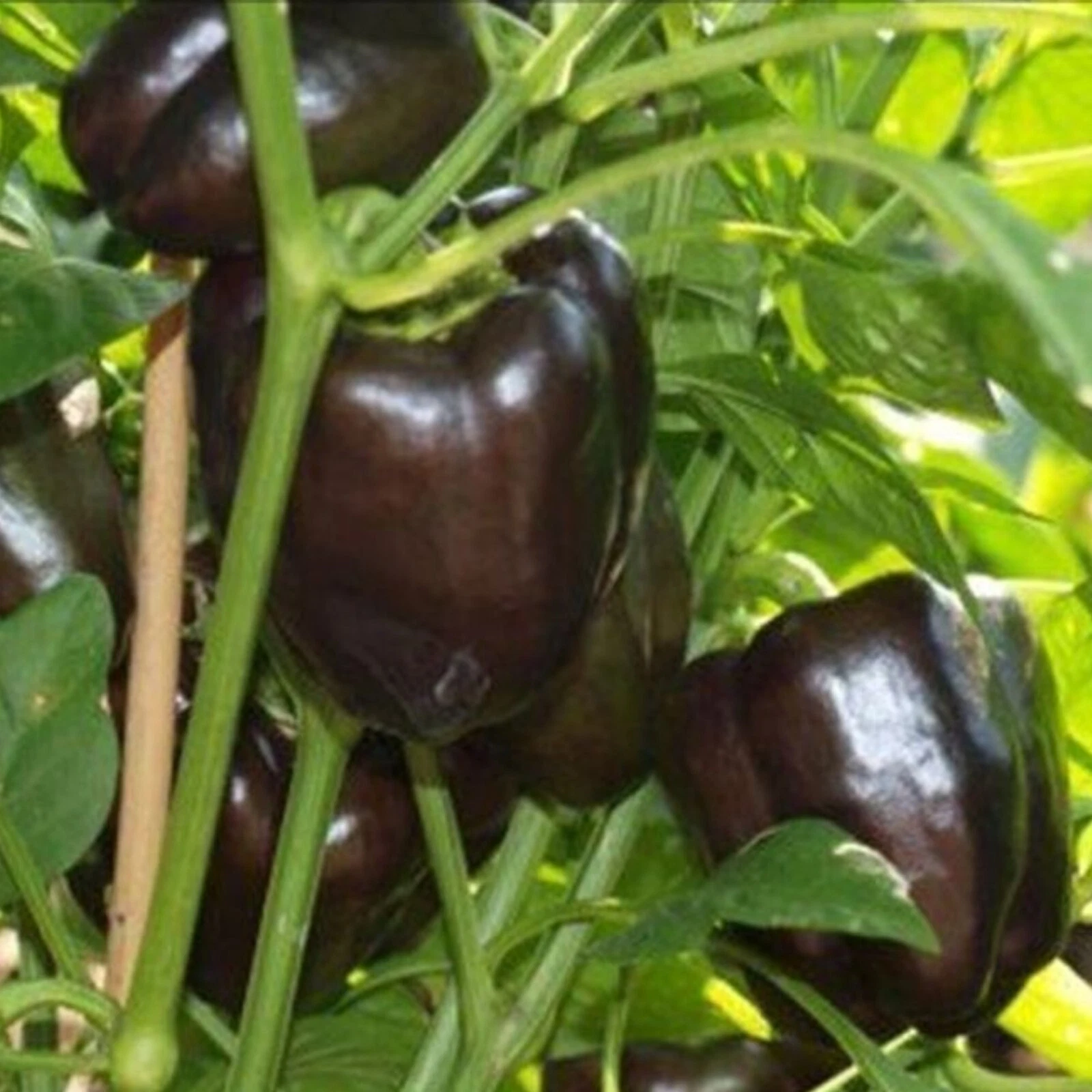
The Chocolate Beauty sweet bell pepper (Capsicum annuum) is a visually striking and delicious variety highly prized for its unique maturation process. The fruits begin as a standard glossy green, but as they reach full maturity, they ripen into a rich, deep chocolate-brown hue, often with purple or black highlights.
This variety is an open-pollinated, heirloom cultivar. While some sources note its appearance in North American archives as a Petoseed introduction from 1993, it is widely classified and maintained in the gardening community as an heirloom due to its open-pollinated nature, which allows gardeners to save seeds that remain true-to-type from generation to generation.
Basics
- Common Name: Chocolate Beauty Sweet Pepper
- Scientific Name: Capsicum annuum ‘Chocolate Beauty’
- Plant Type: Warm-season, Annual
Cultivation Specifications
- Plant Height: 60–90 cm / 24–36 in
- Plant Spread: 45–60 cm / 18–24 in
- Germination Period: 7–14 days
- Seed Spacing: N/A (usually started indoors in trays)
- Transplant Spacing: 45 cm / 18 in
- Row Spacing: 60–90 cm / 24–36 in
- Seed Sowing Depth: 0.5 cm / 0.25 in
- Days to Maturity: 65–75 days (after transplant)
- Plant Size: 7.5-10 cm (cubic) / 3-4 in (cubic)
- Soil Type: Fertile, well-drained, compost-enriched
- Sun Conditions: Full sun (at least 6–8+ hours daily)
- Ideal Container Size: 12–20 L / 3–5 gal
Growing Tips & Notes
- Climate & Light: Chocolate Beauty is a tropical plant that thrives in heat. It requires full sun (at least 6–8 hours daily) to produce the most flavorful and vibrant fruit.
- Starting Seeds: Start seeds indoors 8–12 weeks before your last expected spring frost. They require warm soil temperatures (ideally 75°F to 85°F) for optimal germination.
- Soil & Planting: Plant in well-draining, fertile soil enriched with organic matter. If planting in containers, use at least a 3- to 5-gallon pot per plant.
- Support: While the plants have a bushy, branching habit and may not require intensive staking, providing a light stake can help support the plant when it is heavy with large, blocky fruit.
- Maintenance: Keep soil consistently moist but not waterlogged. Mulching around the base of the plant helps retain soil moisture and suppress weeds. This variety is noted for its resistance to Tobacco Mosaic Virus, making it a robust choice for many home gardens.
Harvesting Time & Procedure
- Timing: Chocolate Beauty typically matures in 65–85 days after transplanting.
- Procedure: You can harvest these peppers while they are still green, though they will have a traditional, mild bell pepper flavor. For the full “chocolate” experience, wait until they have fully ripened to their deep brown color. At this stage, the fruit reaches its peak sweetness and intense flavor. Use sharp shears or pruning snips to cut the stem, leaving a small portion of the stem attached to the fruit to maintain freshness.
Various Uses
- Culinary: The Chocolate Beauty is exceptionally sweet, crisp, and juicy. Its thick, meaty walls make it an ideal choice for stuffing, roasting, or grilling. Its unique color makes it a stunning addition to fresh salads, salsas, and crudité platters. It pairs beautifully with yellow or red peppers for a visually captivating dish.
- Medicinal/Nutritional: Like all sweet peppers, Chocolate Beauty is a nutritional powerhouse. It is high in Vitamin C (which supports immune health) and Vitamin A. The deep color also indicates the presence of antioxidants, including various flavonoids and carotenoids, which help combat oxidative stress in the body. While not used for medicinal “treatments,” incorporating these nutrient-dense peppers into a balanced diet is highly beneficial for overall wellness.
Seed Processing & Storage
Because Chocolate Beauty is an open-pollinated variety, it is stable, and seeds can be successfully saved to grow the same plant next season.
- Selection: Choose the healthiest, most vigorous, and best-tasting peppers from your plant to ensure you propagate those desirable traits. Allow these fruits to become fully ripe—even slightly over-ripe—on the plant before harvesting.
- Extraction: Slice the pepper open and scrape the seeds from the core.
- Cleaning: Separate the seeds from the pulp. Place them in a bowl of water; healthy, viable seeds will sink, while chaff and non-viable seeds will float. Skim off the floating debris.
- Drying: Spread the viable seeds in a single layer on a paper towel, coffee filter, or fine-mesh screen in a well-ventilated area away from direct sunlight. Ensure they are completely dry (they should snap, not bend, when tested) before storage.
- Storage: Place dried seeds in an airtight container (like a glass jar or a sealed envelope inside a jar) and keep them in a cool, dark, and dry location. Properly stored, pepper seeds can remain viable for 3–5 years.
Note: Please be aware that the foliage and stems of all pepper plants belong to the nightshade family and should not be consumed, as they contain alkaloids that can be toxic.