
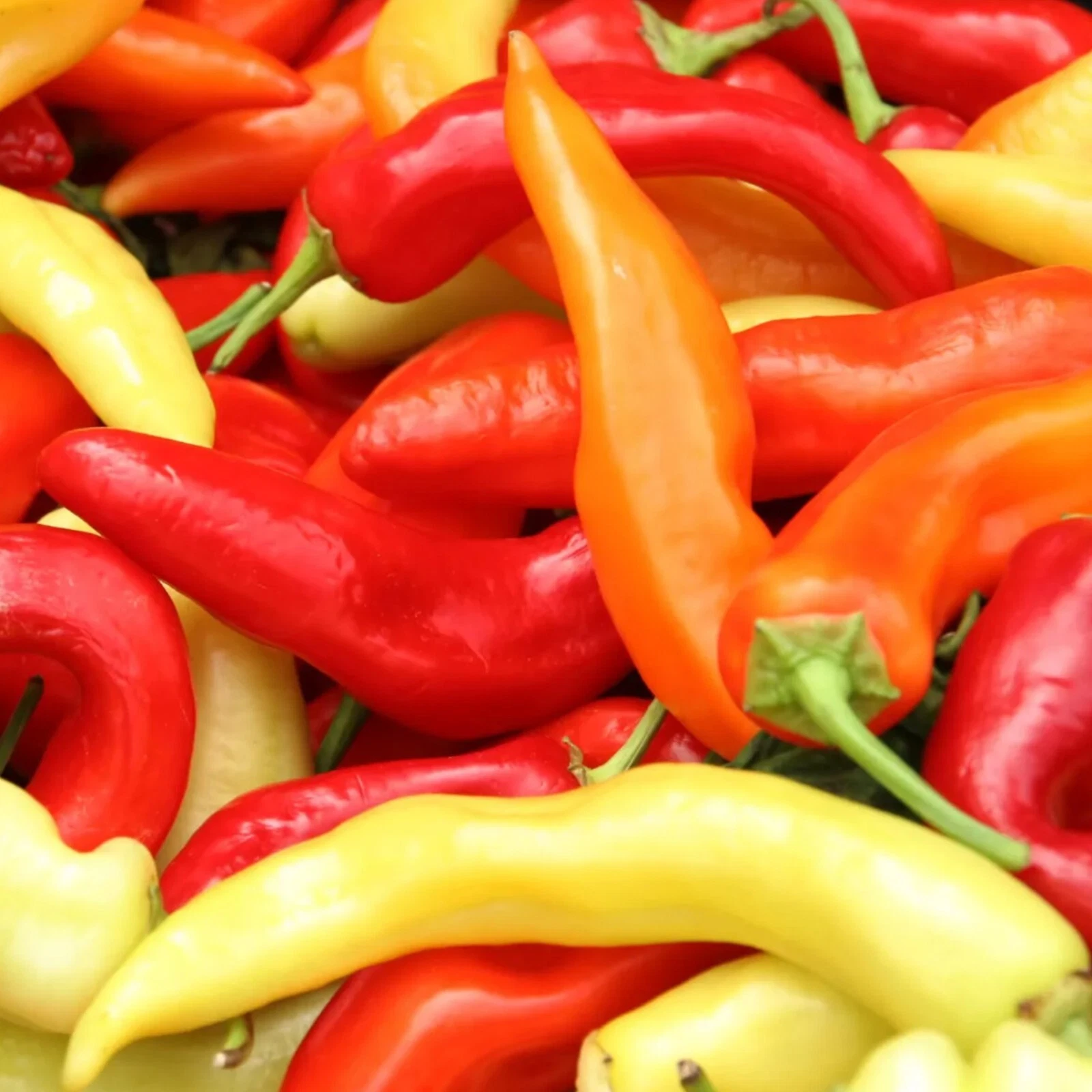
Description
Heirloom / Heritage – Open-Pollinated – Self-Pollinating
The Cubanelle Sweet Pepper (Capsicum annuum), also widely known as the “Cuban pepper,” “Italian frying pepper,” or by its Spanish name ají cubanela, is a beloved, productive variety cherished for its thin-walled, mild, and flavorful fruit. Often classified as an heirloom or ancient open-pollinated variety, it has strong historical roots in both Italian and Caribbean cuisines. While its deepest ancestral roots trace back to domesticated peppers in the Americas, this specific variety is believed to have originated or been heavily refined in Italy before being introduced to the United States (one source notes a formal introduction in 1958). Because it is an open-pollinated heirloom, gardeners can reliably save their own seeds that will grow “true-to-type” from one season to the next.
Basics
- Common Name: Cubanelle Pepper
- Scientific Name: Capsicum annuum ‘Cubanelle’
- Plant Type: Warm-season, Annual (tender perennial grown as an annual)
Cultivation Specifications
- Plant Height: 45–75 cm / 18–30 in
- Plant Spread: 45–60 cm / 18–24 in
- Germination Period: 7–14 days
- Transplant Spacing: 45 cm / 18 in
- Row Spacing: 45–60 cm / 18–24 in
- Seed Sowing Depth: 0.6 cm / 0.25 in
- Days to Maturity: 65–75 days (after transplant)
- Fruit Size: 12.5-15 cm long x 5 cm wide / 5-6 in long by 2 in wide
- Soil Type: Warm, fertile, well-drained
- Sun Conditions: Full sun (at least 6 hours daily)
- Ideal Container Size: 20 L / 5 gal or larger
Growing Tips & Notes
- Climate & Light: Cubanelles are quintessential warm-season lovers. They require full sun (at least 6–8 hours daily) and benefit from long, warm growing seasons to produce their best yield.
- Starting Seeds: Start seeds indoors 6–8 weeks before your last spring frost. Using a heat mat to maintain consistent soil temperatures (ideally 75°F+) will significantly improve germination rates.
- Soil & Planting: Ensure your soil is nutrient-rich, well-draining, and consistent in moisture. These plants typically grow to about 24–30 inches tall and are highly productive, making them excellent choices for both raised beds and large containers.
- Support: Although they have sturdy habits, a heavy crop can occasionally weigh down branches. A simple stake or small tomato cage can help keep the plant upright and prevent stem damage.
Harvesting Time & Procedure
- Timing: Cubanelles are early producers, typically ready for harvest in 65–75 days after transplanting.
- Procedure: You can harvest the fruit at any stage. They are traditionally picked when they are light yellowish-green for frying or roasting, as this is when their texture is at its peak. However, if left to ripen on the plant, they will turn a vibrant orange and finally a deep, sweet red. When harvesting, always use sharp shears or scissors to snip the stem, as pulling the fruit by hand can easily break the plant’s brittle branches.
Various Uses
- Culinary: Cubanelle peppers are widely celebrated as the ultimate “frying pepper.” Their thin, slightly waxy skin and lower water content compared to bell peppers allow them to crisp up beautifully in a pan, making them ideal for frying, roasting, or stuffing. They are a staple ingredient in many Latin American, Caribbean, and Italian dishes, adding a mild, sweet, and occasionally slightly fruity flavor to stir-fries, sandwiches, salads, pizzas, and traditional stews.
- Medicinal/Nutritional: Like other sweet peppers, Cubanelles are an excellent source of immune-boosting Vitamin C, Vitamin A, and beneficial antioxidants such as carotenoids. Including them in a balanced diet promotes overall wellness, helps fight oxidative stress, and provides essential micronutrients that contribute to heart and eye health.
Seed Processing & Storage
Because the Cubanelle is an open-pollinated heirloom variety, you can easily harvest and save seeds to replant for many years.
- Selection: Allow your most vigorous, high-quality peppers to ripen fully on the plant until they have reached their deep red, mature stage.
- Extraction: Carefully slice the fully ripe pepper open and remove the mature seeds.
- Cleaning: Rinse the seeds thoroughly in a bowl of water to remove any clinging pulp. Floating seeds are usually non-viable; discard them and keep the ones that sink.
- Drying: Spread the cleaned, viable seeds on a paper towel, parchment paper, or a fine screen in a well-ventilated area away from direct sunlight. Allow them to air-dry until they are hard and brittle.
- Storage: Once completely dry, store your seeds in an airtight container (such as a glass jar or a sealed envelope) in a cool, dark, and dry location. Properly saved and stored, these seeds will remain viable for 3–5 years.
Note: As with all pepper plants, please remember that the foliage and stems belong to the nightshade family and should not be consumed, as they contain alkaloids that can be harmful if ingested.



