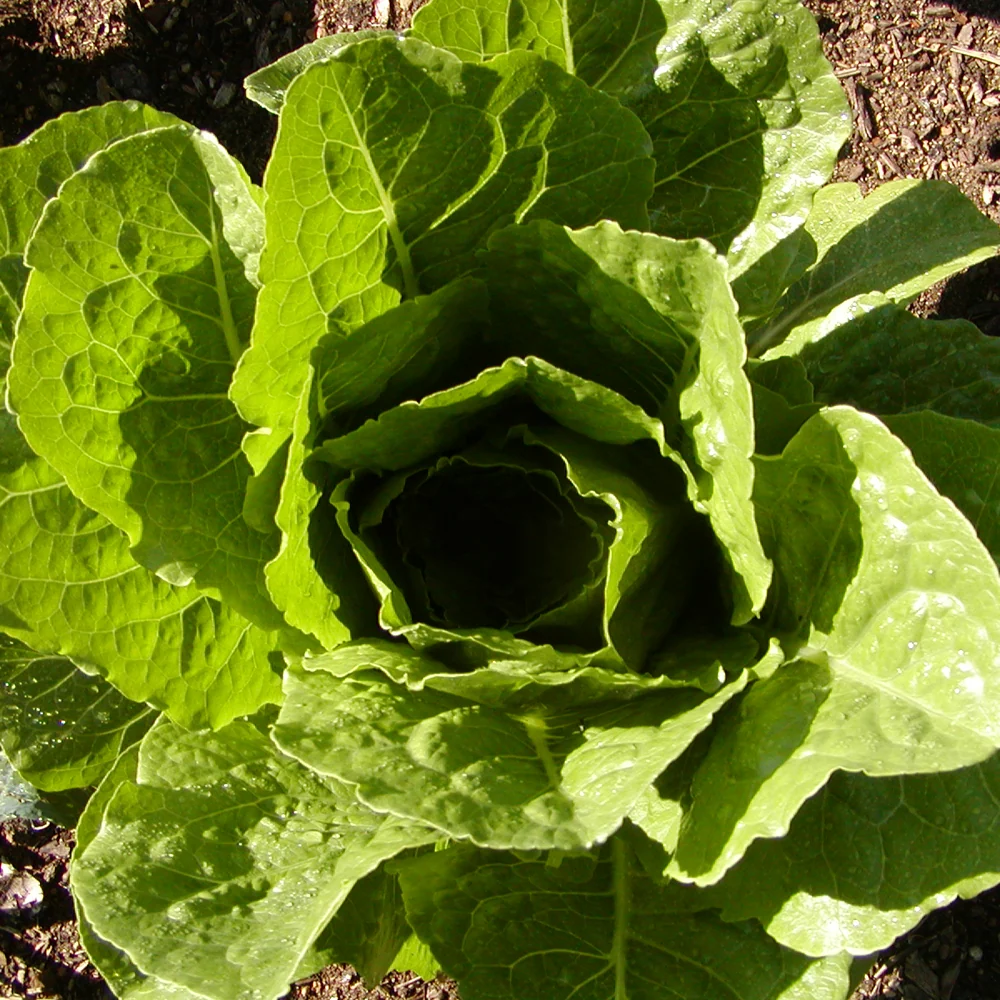
Description
Heirloom / Heritage – Open-Pollinated – Self-Pollinating
Parris Island Cos, also frequently referred to simply as Parris Island Romaine, is a classic and reliable lettuce (Lactuca sativa) cultivar. It was developed by the Clemson College Truck Experiment Station in Charleston, South Carolina, as a cross between ‘PI 120965’ and ‘Dark Green’. It was introduced commercially by Ferry-Morse in 1951. Named after Parris Island, South Carolina, this open-pollinated variety is widely celebrated by gardeners and is frequently classified as a heritage or heirloom cultivar. It is particularly valued for its upright, tall habit, dark green leaves, and excellent bolt resistance, even in warmer weather conditions.
Basics
- Common Name: Parris Island Cos Romaine Lettuce
- Scientific Name: Lactuca sativa ‘Parris Island’
- Plant Type: Annual, Cold-season
Plant Details
- Plant Height: 25–30 cm / 10–12 in
- Plant Spread: 20–25 cm / 8–10 in
- Germination Period: 5–10 days
- Transplant Spacing: 25–30 cm / 10–12 in
- Row Spacing: 45–60 cm / 18–24 in
- Seed Sowing Depth: 0.3 cm / 0.125 in
- Days to Maturity: 65–70 days
- Soil Type: Fertile, well-drained, cool soil
- Sun Conditions: Full sun in cool weather; partial shade in warm conditions
- Ideal Container Size: 4.–8 litres / 1–2 gallons) – 15–20 cm (6–8 in) deep
Growing Tips & Notes
Parris Island Cos thrives in cool-weather conditions but is known for its remarkable ability to withstand heat better than many other romaine varieties.
- Sowing: Direct sow in early spring as soon as the soil can be worked, or in late summer for a fall harvest. Lettuce seeds require light to germinate, so press them lightly into the soil surface but do not bury them deeply.
- Spacing: Space plants about 8–10 inches apart to allow for proper air circulation and head development.
- Moisture: Consistent moisture is essential. If the soil dries out too much, the leaves can become bitter, and the plant may bolt (flower prematurely).
- Soil: It prefers rich, well-draining soil with a pH between 6.0 and 7.0.
- Light: While it prefers full sun in cooler temperatures, it benefits from partial shade when grown during late spring or summer to prevent sun-scald and slow down bolting.
Harvesting Time & Procedure
Parris Island Cos is typically ready for harvest in approximately 65–70 days from sowing. You can harvest it using two primary methods:
- Cut-and-come-again: Harvest individual outer leaves as needed for salads, allowing the center to continue growing and producing more leaves.
- Whole Head: Once the head feels firm and fully developed, harvest the entire plant by cutting it off at the base with a clean, sharp knife just above the soil line.
- Timing: For the best flavor, harvest early in the morning when the leaves are crisp and hydrated from the cool night air.
Various Uses
- Culinary: Parris Island Cos is the quintessential romaine lettuce. Its crisp texture and mild, sweet flavor make it the perfect base for Caesar salads. The sturdy leaves hold up well to thick, creamy dressings and are excellent for lettuce wraps or adding crunch to sandwiches and burgers. Because of its sturdy structure, it can even be lightly grilled to add a unique, smoky dimension to salads.
- Nutritional: Like most dark-green leafy vegetables, Parris Island Cos is nutrient-dense. It is a good source of vitamins A, C, and K, as well as folate and minerals such as potassium and iron. It is low in calories, making it an excellent addition to a healthy, balanced diet.
Seed Processing & Storage
Because Parris Island Cos is an open-pollinated variety, it will grow “true-to-type,” meaning you can save seeds from one year to the next and expect the same results.
- Seed Saving Procedure: To save seeds, you must allow at least a few of your healthiest, best-tasting plants to “bolt”—meaning they will grow a tall flowering stalk. Once the flowers fade and the seed heads begin to dry out and develop white, fluffy “parachutes” (similar to dandelions), cut the seed stalks. Place the heads upside down in a paper bag to fully dry. Once completely dry, crush the heads to release the seeds, then winnow them by blowing away the light chaff, leaving only the clean, viable seeds behind.
- Storage: Store your thoroughly dried, clean seeds in an airtight container or a paper envelope in a cool, dark, and dry place. When stored under these optimal conditions, lettuce seeds can remain viable for 3–5 years.