
Description
Heirloom / Heritage – Open-Pollinated – Self-Pollinating – Indeterminate
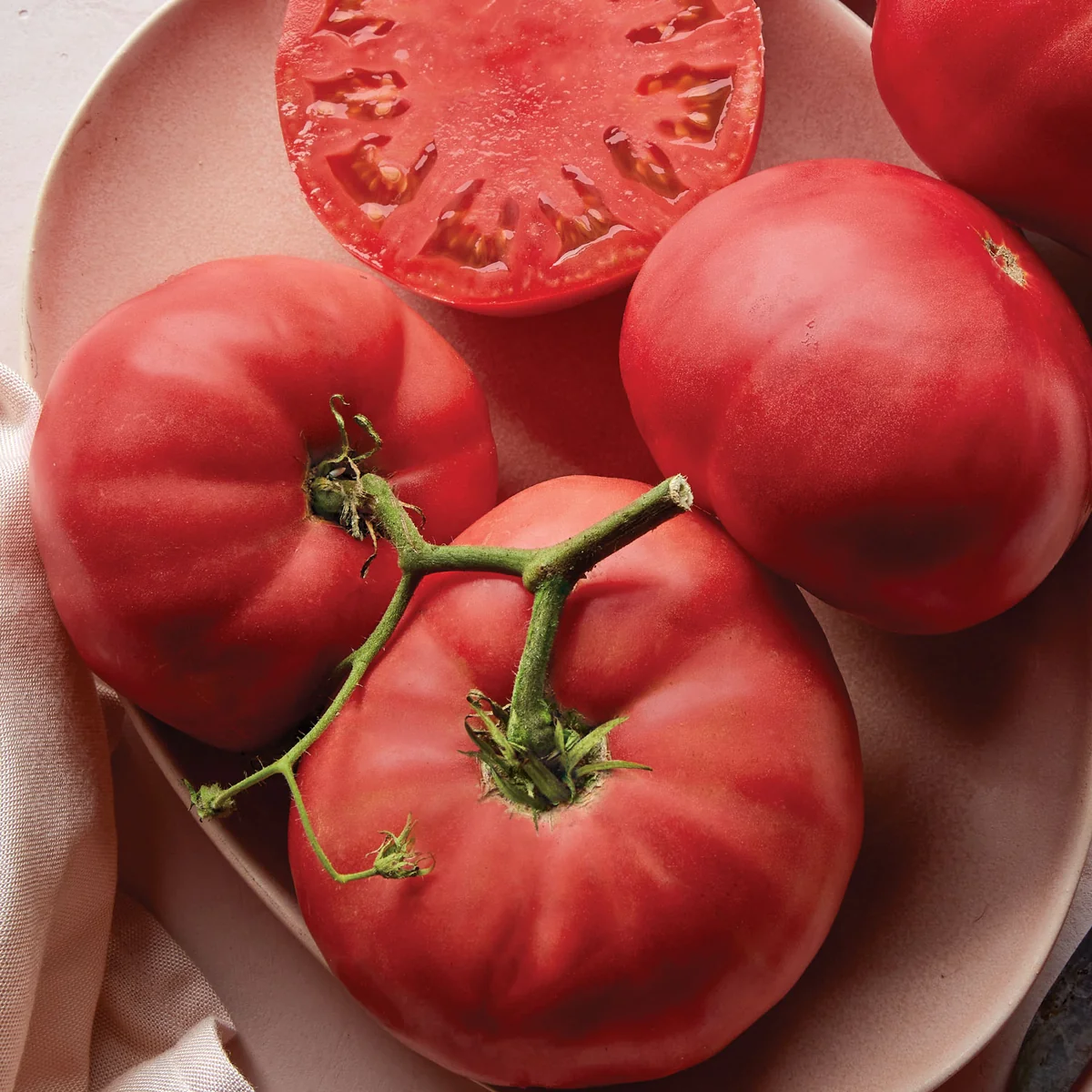
Brandywine Pink, frequently simply referred to as “Brandywine” or “Brandywine (Sudduth’s Strain),” is arguably the most famous heirloom tomato in existence. Its history is a blend of commercial documentation and deep-rooted family tradition. While it was first offered commercially in 1889 by the seed company Johnson & Stokes—who reported receiving the seed from an Ohio customer in 1887—its true origins are steeped in lore. The modern popularity of this variety is largely credited to the Sudduth family of Tennessee, who had grown it for generations before Dorris Sudduth Hill shared the seeds with tomato enthusiast Ben Quisenberry. Quisenberry introduced this specific strain, widely considered the quintessential Brandywine, to the Seed Savers Exchange in 1982. It is a true open-pollinated, indeterminate heirloom known for its exceptional, complex flavor and large, potato-leaf foliage.
Basics
- Common Name: Brandywine Pink Tomato
- Scientific Name: Solanum lycopersicum ‘Brandywine Pink’
- Plant Type: warm-season, annual, open-pollinated, self-pollinating, indeterminates
Plant Details
- Plant Height: 150–240 cm / 5–8 ft
- Plant Spread: 60–90 cm / 24–36 in
- Germination Period: 5–10 days
- Transplant Spacing: 60–90 cm / 24–36 in
- Row Spacing: 90–120 cm / 36–48 in
- Seed Sowing Depth: 0.5–1 cm / 0.25-0.5 in
- Days to Maturity: Approximately 80–90 days from transplanting
- Fruit Size: 15-18 cm / 6-7 in – 225-450 g / 8-16 oz
- Soil Type: Fertile, well-drained loam enriched with compost; ideal pH 6.0–6.8
- Sun Conditions: Full sun; at least 6–8 hours of direct sunlight daily
- Ideal Container size: 40–60 liters / 10–15 gallons
Growing Tips & Notes
Brandywine Pink is a vigorous, large-leafed, indeterminate plant that rewards careful attention.
- Support: These plants can become quite heavy and sprawling. Use very sturdy, tall cages or a strong trellis system to support the weight of the large fruits and extensive vine growth.
- Foliage: It features unique “potato-leaf” foliage, which is broader and less jagged than typical tomato leaves. Do not mistake this for a disease or issue; it is a defining characteristic of this variety.
- Consistent Moisture: Brandywine Pink is somewhat prone to fruit cracking if moisture levels fluctuate wildly. Maintain consistent soil moisture through regular watering and a thick layer of organic mulch at the base.
- Heat Sensitivity: It can sometimes struggle to set fruit in extreme, prolonged high temperatures. Provide afternoon shade if you are gardening in very hot climates.
Harvesting Time & Procedure
As a late-season variety, Brandywine Pink requires a longer growing season, typically reaching maturity about 80 to 90 days after transplanting. The fruits are large, sometimes weighing over a pound, and mature to a deep pinkish-red color. They are best harvested when they have developed a deep, uniform color and feel slightly soft when gently pressed. Use clean garden snips to cut the stem just above the calyx to avoid bruising or damaging the skin, which can be delicate on these large fruits.
Various Uses
The Brandywine Pink is considered by many to be the gold standard for flavor, combining high sugar and acid levels for a “true tomato” taste that is rich, tangy, and sweet.
- Culinary: Because of its large size and outstanding flavor, this variety is best used fresh. It is ideal for thick slices on sandwiches, burgers, or gourmet BLTs. It makes a stunning addition to tomato salads, where its size can be showcased, or can be used to make exceptionally flavorful—albeit pale-colored—sauces, salsas, and fresh gazpacho.
- Nutritional: Like all tomatoes, Brandywine Pink is packed with Vitamin C, Vitamin A, and potassium. It also contains lycopene, a powerful antioxidant known for supporting heart health and potentially providing protective benefits against certain chronic conditions.
Seed Processing & Storage
As an open-pollinated heirloom, Brandywine Pink is excellent for seed saving; seeds saved from these plants will produce fruits identical to the parent.
- Selection: Choose a fully ripe, healthy, and representative fruit from your most productive plant.
- Fermentation: Scoop the seeds and surrounding gelatinous pulp into a small glass jar. Add a small splash of water. Let this mixture sit at room temperature for 2 to 4 days, stirring occasionally. A layer of mold will form on top—this is normal and necessary to digest the germination-inhibiting coating on the seeds.
- Cleaning: Fill the jar with water, stir, and allow the heavy, viable seeds to settle at the bottom. Pour off the floating pulp, debris, and any non-viable seeds. Repeat this rinsing process until the water is clear and only clean seeds remain.
- Drying: Spread the clean seeds thinly on a paper towel, coffee filter, or glass plate to dry completely in a well-ventilated location, away from direct sunlight.
- Storage: Once thoroughly dry, label your container with the variety name and harvest year. Store in an airtight container in a cool, dark, and dry place. Properly processed and stored seeds can remain viable for 5 years or more.



