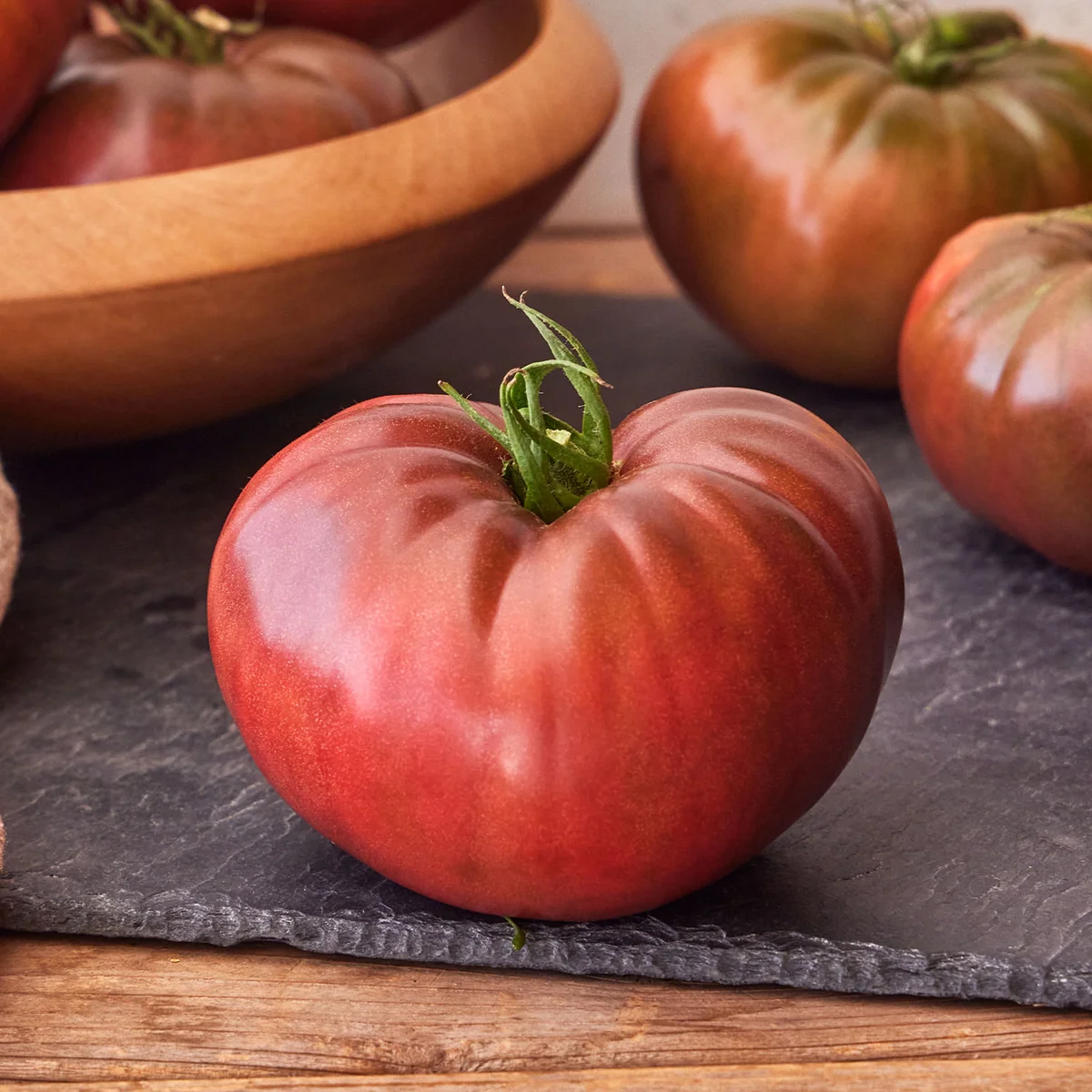
Description
Heirloom / Heritage – Open-Pollinated – Self-Pollinating – Indeterminate
Cherokee Purple is one of the most famous and beloved heirloom tomatoes in modern gardening. Its story began in 1990 when J.D. Green of Sevierville, Tennessee, sent unnamed tomato seeds to Craig LeHoullier, a renowned tomato grower and author. Green had received these seeds from a neighbor who passed down the family tradition that the variety had been grown for over a century, originally gifted to her family by the Cherokee people. LeHoullier grew them out, was struck by their complex flavor and unique dusky purple-brown color, and named them “Cherokee Purple.” The variety first appeared in the 1991 Seed Savers Exchange yearbook and was subsequently introduced to the public in the 1993 Southern Exposure Seed Exchange catalog. It is an open-pollinated, indeterminate heirloom that remains a standard for quality and flavor.
Basics
- Common Name: Cherokee Purple Tomato
- Scientific Name: Solanum lycopersicum ‘Cherokee Purple’
- Plant Type: annual, warm-season, open-pollinating, self-pollinated, indeterminates
Plant Details
- Plant height: 120–270 cm / 48–108 in
- Plant spread: 60–90 cm / 24–36 in
- Germination Period: 7–10 days
- Transplant spacing: 60–90 cm / 24–36 in
- Row spacing: 90–120 cm / 36–48 in
- Seed sowing depth: 0.5–1 cm / 0.25-0.5 in
- Days to Maturity: 70–85 days after transplanting
- Fruit Size: 7.5-10 cm / 3-4 in – 225-340 g / 8-12 oz
- Soil type: Fertile, well-drained, pH 6.0–6.8
- Sun Conditions: Full Sun (6-8+ hours daily)
- Ideal Container size: 20–24 litres / 5–6 gallons
Growing Tips & Notes
As an indeterminate variety, Cherokee Purple plants are vigorous, productive, and require space and support.
- Support: These plants grow tall and heavy. Use tall, sturdy cages, stakes, or a robust trellis system to provide ample support throughout the season.
- Sun & Soil: Plant in full sun (at least 6-8 hours daily). They prefer fertile, well-draining soil rich in organic matter.
- Care: Consistent watering is critical. Fluctuating soil moisture levels are a primary cause of fruit cracking in this variety. Mulch the base of the plant to retain moisture and suppress weeds.
- Safety Note: As with all tomatoes, the leaves and stems are toxic if ingested due to their solanine content. Ensure they are kept away from pets and small children.
Harvesting Time & Procedure
Cherokee Purple is a mid-season variety, typically ready for harvest 75 to 85 days after transplanting. The fruits do not ripen to a bright red; instead, they turn a deep, dusky color that is a mix of brownish-purple and dusty rose. They are ready to harvest when they feel slightly soft when gently pressed. Harvest by cutting the stem just above the fruit calyx with garden snips to prevent damaging the fragile skin of the tomato.
Various Uses
Cherokee Purple is legendary for its rich, smoky, and slightly sweet “old-fashioned” flavor, making it highly versatile.
- Culinary: It is best enjoyed fresh to appreciate its unique texture and complex flavor. Slice it for gourmet BLTs, add it to fresh salads, or serve it on a platter with just a pinch of sea salt. It also makes excellent, richly flavored tomato sauces, gazpacho, and salsas, though its dark color will result in a more rustic-looking finished product.
- Nutritional: Like all tomatoes, Cherokee Purple is an excellent source of Vitamin C and Vitamin A. Additionally, its dark color indicates a higher concentration of certain antioxidants compared to lighter-colored tomatoes, contributing to overall health.
Seed Processing & Storage
Because Cherokee Purple is an open-pollinated heirloom, it is perfectly suited for seed saving, and saved seeds will grow true-to-type, provided the parent plant was not cross-pollinated by a different variety.
- Selection: Select the largest, healthiest, most representative fruit from a productive plant.
- Fermentation: Cut the tomato and squeeze the seeds and pulp into a glass container. Add a small amount of water if necessary. Allow the mixture to ferment at room temperature for 2 to 4 days, stirring once or twice a day. This process breaks down the germination-inhibiting coating on the seeds.
- Cleaning: Once fermentation is finished, add more water to the container. Viable seeds will sink to the bottom, while debris will float. Carefully pour off the top liquid and debris. Repeat this step until the water is clear and only clean seeds remain.
- Drying: Spread the seeds on a paper towel, coffee filter, or glass plate to dry completely in a well-ventilated area, out of direct sunlight.
- Storage: Once dry, place the seeds in a labeled, airtight container or envelope and store them in a cool, dark, and dry place to ensure longevity. Properly stored, these seeds can remain viable for 5 or more years.