
Description
Heirloom / Heritage – Open-Pollinated – Self-Pollinating – Determinate
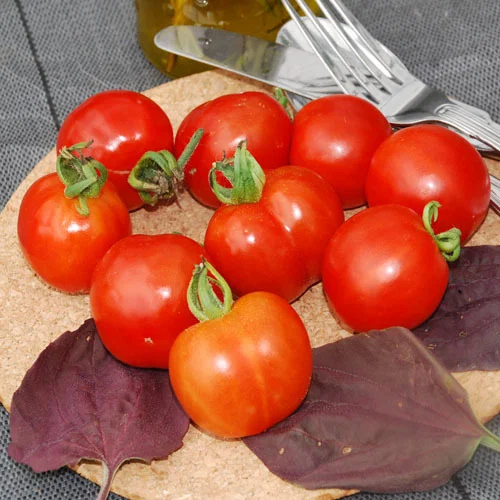
The Father Frost tomato, also widely known by its Russian name, Moroz Batyushka, is a highly regarded, compact tomato variety with roots tracing back to Eastern Europe and Russia. It is a traditional, open-pollinated variety, meaning that when grown under isolated conditions, it will produce seeds that remain true to the parent plant, allowing gardeners to reliably save and replant them in future seasons. While exact dates of origin and the names of the original breeders are undocumented, it has been cherished in various gardening communities for generations due to its reputation for early maturity and notable cold tolerance, making it an excellent choice for gardeners in shorter-season climates. Note that while often marketed under the “micro-dwarf” label, Father Frost is more accurately classified as a small, compact dwarf determinate, typically reaching heights of 18 to 24 inches.
Basics
- Common Name: Father Frost Tomato (Moroz Batyushka)
- Scientific Name: Solanum lycopersicum ‘Father Frost’
- Plant Type: annual, warm-season, determinate, compact, dwarf, bush
Plant Details
- Plant Height: 45–60 cm / 18–24 in
- Plant Spread: 45–60 cm / 18–24 in
- Germination Period: 7–14 days
- Transplant Spacing: 45–60 cm / 18–24 in
- Row Spacing: 60–90 cm / 24–36 in
- Seed Sowing Depth: 0.5–1 cm / 1/4–1/2 in
- Days to Maturity: 55–65 days
- Fruit Size: 4-6 cm / 1.5-2.5 in – 80-120 g / 3-4 oz
- Soil Type: Well-draining, nutrient-rich potting mix with a pH of 6.0–6.8
- Sun Conditions: Full sun (at least 6–8 hours daily)
- Ideal Container Size: 12–16 litres (3–4 gallons), minimum 30–40 cm / 12–16 in diameter
Growing Tips & Notes
Father Frost is exceptionally well-suited for container gardening, balconies, and small-space patios.
- Support: Although it remains compact, the plant can become heavily laden with fruit. A small cage or stake is recommended to support the stems and keep the fruit off the ground, which helps prevent rot and improves air circulation.
- Light: As with all tomatoes, provide at least 6 to 8 hours of direct, full sun daily for the best production and flavor development.
- Temperature: True to its name, this variety exhibits impressive cold tolerance, often setting fruit earlier in the season than many other varieties. However, it still performs best when protected from hard frosts.
- Spacing & Containers: A 3- to 5-gallon container is perfect for this plant. If planting in the ground, ensure proper spacing (roughly 18 inches apart) to allow for adequate airflow between plants, which is vital for preventing common fungal diseases.
- Safety Note: Please be aware that the leaves, stems, and all non-fruit parts of the tomato plant contain solanine and are toxic if ingested by humans or pets.
Harvesting Time & Procedure
Father Frost is an early-maturing variety, often ready to harvest within 60 to 70 days after transplanting. The fruits are typically red, salad-sized, and produced in good quantities. Harvest the fruit when it has developed a deep, uniform red color and yields slightly to gentle pressure. The best practice is to use clean garden snips to harvest individual fruits. Avoid pulling the tomatoes directly from the plant, as the stems of these compact varieties can be brittle and prone to breaking.
Various Uses
This versatile tomato is a productive favorite for both fresh use and preservation.
- Culinary Applications: The fruits are ideal for fresh eating, slicing into salads, or using on sandwiches due to their classic, balanced tomato flavor. Their salad size makes them perfect for adding to salsas, quick sauces, or roasted alongside herbs and garlic. They also hold up well to light preserving, such as being flash-frozen or lightly cooked in preserves.
- Nutritional Benefits: Like other red tomatoes, Father Frost is a fantastic source of lycopene, a potent antioxidant that supports cardiovascular health. It also provides essential vitamins, particularly Vitamin A and Vitamin C, which are crucial for maintaining a healthy immune system and promoting good skin health.
- General Health: The antioxidants found in these tomatoes help reduce oxidative stress in the body. Incorporating fresh, nutrient-dense produce like Father Frost into a balanced diet is a delicious way to support long-term wellness.
Seed Processing & Storage
Because Father Frost is a stable, open-pollinated variety, saving seeds is straightforward and rewarding.
- Selection: Choose only the healthiest, most perfectly ripe, and disease-free fruits from your best-performing plants to save seeds.
- Fermentation: Slice the tomato and scoop the seeds and surrounding gelatinous pulp into a small glass jar. Add a small amount of water to cover. Allow this mixture to sit in a warm, sheltered spot for 2–4 days. Fermentation is a critical step that breaks down the natural germination-inhibiting gel coating on the seeds and kills potential seed-borne pathogens.
- Cleaning: Once a layer of mold appears on the surface, fill the jar with more water and stir. The viable, high-quality seeds will sink to the bottom. Carefully pour off the mold, pulp, and floating debris. Rinse the remaining seeds with fresh water until the water runs completely clear.
- Drying: Spread the clean seeds in a single layer on a plate, parchment paper, or a coffee filter. Allow them to air dry in a well-ventilated, shaded area for several days until they are completely brittle and dry.
- Storage: Once fully dried, store the seeds in an airtight container—such as a small glass vial or a labeled paper envelope—kept in a cool, dark, and dry environment. When stored properly, these seeds can remain viable for 5–10 years.



