Description
Open-Pollinated – Self-Pollinating – Determinate – Dwarf
Dwarf Metallica is a relatively modern variety developed through the collaborative efforts of the Dwarf Tomato Project. It belongs to the project’s “Beauty” family and was created from an intentional cross between Dwarf Wild Fred and the indeterminate heirloom Beauty King. The cross was performed by Vincent Lavallo, and the variety was subsequently selected and named by project volunteer Suzanne (Susan) Dzejachok, with extensive evaluation and grow-outs conducted by numerous other project volunteers. As a product of the Dwarf Tomato Project, it is an open-pollinated, stable variety, and it has been released as an open-source variety through the Open Source Seed Initiative (OSSI), meaning it is protected from restrictive intellectual property claims to ensure it remains available to home gardeners and breeders alike.
Basics
- Common Name: Metallica Dwarf Tomato
- Scientific Name: Solanum lycopersicum ‘Metallica Dwarf’
- Plant Type: annual, warm-season, open-pollinating, self-pollinated, determinate, dwarf
Plant Details
- Plant Height: 60–90 cm / 24–36 in
- Plant Spread: 60–90 cm / 24–36 in
- Germination Period: 7–14 days
- Seed Spacing: 30–45 cm / 12–18 in
- Transplant Spacing: 60–90 cm / 24–36 in
- Row Spacing: 90–120 cm / 36–48 in
- Seed Sowing Depth: 0.5–1 cm / 0.25–0.5 in
- Days to Maturity: 75–80 days
- Fruit Size: 5-10 cm / 2-4 in – 125-340 g / 5-12 oz
- Soil Type: Well-draining, fertile, slightly acidic
- Sun Conditions: Full sun (6–8+ hours)
- Ideal Container Size: 20–28 litres / 5–7 gallons
Growing Tips & Notes
As a true dwarf variety, Dwarf Metallica is characterized by its compact, sturdy growth habit. The plants typically reach a manageable height of 2–3 feet, making them exceptionally well-suited for container gardening, raised beds, or small garden plots where space is at a premium.
- Habit: It features rugose (crinkled), dark green, regular foliage.
- Support: Although compact, the plants produce heavy yields of medium-sized fruit and may require light staking to keep the branches from sagging under the weight of the tomatoes.
- Sun & Soil: Plant in a location that receives full sun (at least 6–8 hours daily). Like all tomatoes, it thrives in rich, well-draining soil with a pH between 6.0 and 6.8.
- Watering: Maintain consistent soil moisture to prevent issues like blossom-end rot or fruit cracking. Applying mulch around the base of the plant helps retain soil moisture and suppresses weeds.
Harvesting Time & Procedure
Dwarf Metallica is generally considered a mid- to late-season producer, typically maturing approximately 75 days after transplanting into the garden.
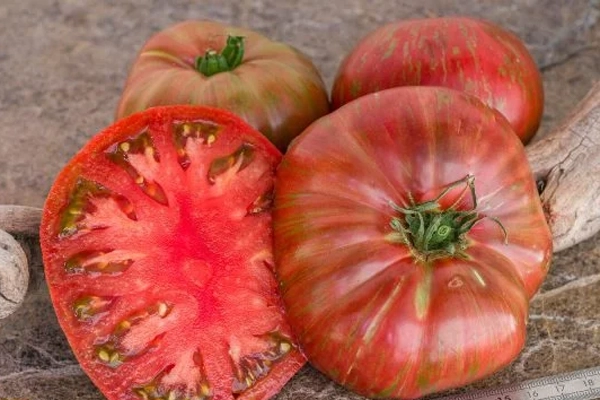
- Indicators: The fruit is visually distinct, featuring a beautiful purple or dark pink skin marked with striking green metallic stripes.
- Procedure: Harvest when the fruit feels slightly soft to the touch and the color has fully developed. To harvest, gently lift the fruit and give it a slight twist, or use garden snips to cut the stem just above the calyx to avoid damaging the plant.
Various Uses
The flavor profile of Dwarf Metallica is assertive and well-balanced, often described as sweet with a pleasant tangy quality.
- Culinary: These medium-sized fruits (averaging around 6 oz, though they can range from 4–16 oz) are perfect for slicing onto sandwiches, adding to fresh salads, or eating directly off the vine. Their striking appearance also makes them excellent for visually appealing platters.
- Nutritional: Like many dark-skinned tomato varieties, Dwarf Metallica is a rich source of antioxidants, including lycopene and anthocyanins, which are associated with cardiovascular health and reduced inflammation. They are also high in Vitamin C and potassium.
- Safety Note: While the fruit is nutritious and delicious, please note that the stems and leaves of all tomato plants contain solanine and should not be consumed, as they can be toxic.
Seed Processing & Storage
Because Dwarf Metallica is an open-pollinated variety, it will grow “true-to-type” from saved seeds, meaning the offspring will be identical to the parent plant.
- Processing: To save seeds, select a healthy, fully ripe tomato. Scoop the pulp and seeds into a small glass jar and add a small amount of water. Let the mixture sit in a warm spot for 2–4 days, allowing it to ferment (a layer of mold will form on the surface—this is normal). This process breaks down the germination-inhibiting gel sack surrounding each seed. Once fermented, fill the jar with water, let the good seeds settle to the bottom, and pour off the pulp and mold. Rinse the seeds several times with clean water, strain them, and spread them on a paper plate to dry completely for a week.
- Storage: Once fully dry, store seeds in an airtight container (like a glass jar or sealed envelope) in a cool, dark, and dry place. Properly stored, they can remain viable for 5–10 years.