
Description
Heirloom / Heritage – Open-Pollinated – Self-Pollnating
Bloomsdale Longstanding is one of the most iconic and beloved spinach varieties in North American gardening. While the original Bloomsdale spinach has roots in David Landreth’s seed business in Pennsylvania dating back to the 19th century, the “Longstanding” selection was specifically developed and introduced in 1925 by the Dutch breeders Zwaan and Van der Molen. They refined the original by selecting for a plant that stayed in high-quality leaf production longer before “bolting” (the process where the plant shifts energy to producing seeds in response to warm weather or long daylight hours).
This is an heirloom, open-pollinated variety. Because it is open-pollinated, not a modern F1 hybrid, you can reliably save seeds from your own plants to grow again in future seasons, and the resulting plants will grow true-to-type.
Basics
Common Name: Bloomsdale Longstanding Spinach
Scientific Name: Spinacia oleracea
- Plant Height: 20–30 cm (8–12 in)
- Germination: 7–14 days
- Seed Spacing: 5–10 cm (2–4 in)
- Row Spacing: 30–45 cm (12–18 in)
- Seed Sowing Depth: 1–1.5 cm (½–⅝ in)
- Days to Maturity: 45–55 days; baby leaves in approximately 25–35 days
- Soil Type: Rich, fertile, well-drained soil with consistent moisture; pH 6.0–7.5
- Sun Conditions: Full sun to partial shade
- Recommended Container Size: 5–8 L (1.5–2 gal) per plant, or a container at least 15 cm (6 in) deep
Growing Tips & Notes
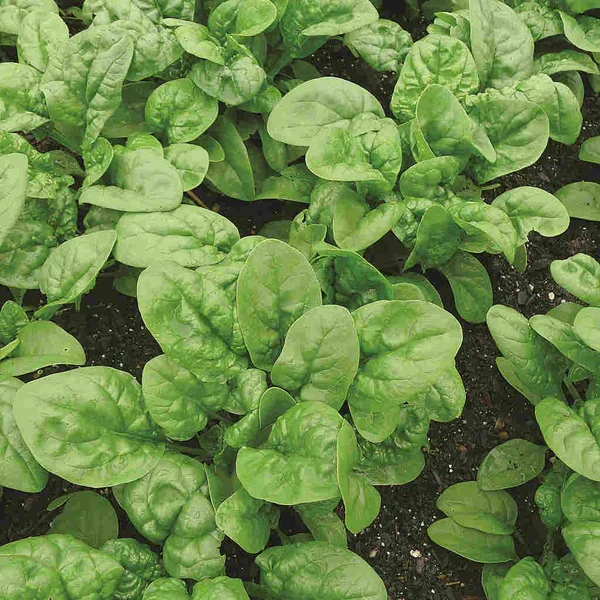
Known for its deep green, heavily crinkled, and savoyed (curly) leaves, Bloomsdale Longstanding is prized for its excellent texture and flavor.
- Temperature: Spinach is a cool-weather crop. It thrives in the spring and autumn. While “longstanding” refers to its ability to resist bolting, it will still bolt when summer temperatures consistently rise.
- Soil: Plant in well-drained, fertile soil rich in organic matter. Spinach prefers a neutral pH (around 6.5 to 7.0).
- Planting: For early spring harvests, sow seeds as soon as the soil can be worked. For fall crops, sow in late summer.
- Care: Keep the soil consistently moist but not waterlogged. Spinach has shallow roots, so a light layer of mulch can help maintain soil moisture and keep the leaves clean from soil splashing during rain.
Harvesting Time & Procedure
Bloomsdale Longstanding is typically ready to harvest in 40 to 50 days from sowing.
- Procedure: You can harvest by picking individual outer leaves once they reach a usable size, allowing the center of the plant to continue growing. This “cut-and-come-again” method extends your harvest window significantly. Alternatively, you can harvest the entire plant by cutting it at the base once it reaches maturity.
- Timing: Harvest in the cool of the morning when the leaves are most crisp and hydrated. If the plant begins to send up a central flower stalk (bolting), harvest the remaining leaves immediately, as the flavor will turn bitter.
Various Uses
Bloomsdale Longstanding is highly versatile in the kitchen, favored for its thick, succulent leaves that hold up better to cooking than thinner spinach types.
- Culinary: The raw leaves are tender enough for fresh salads or as a hearty base for nutrient-dense smoothies. When cooked, its robust leaves make it ideal for steaming, sautéing with garlic and olive oil, or incorporating into soups, quiches, lasagnas, and dips. Its classic, earthy, sweet flavor profile is a staple in Mediterranean and various international cuisines.
- Medicinal & Nutritional: While spinach is not typically used as a primary medicinal herb, it is a nutritional powerhouse. It is exceptionally high in vitamins A, C, and K, as well as folate, magnesium, and iron. Including spinach in the diet is associated with promoting eye health, reducing oxidative stress, and supporting overall cardiovascular health due to its high antioxidant content and nitrate levels.
Seed Processing & Storage
Because this is an open-pollinated heirloom variety, saving your own seeds is straightforward and rewarding.
- Processing:
- Allow to Mature: To harvest seeds, you must allow the plant to fully bolt and go to seed. The plant will send up a tall stalk and produce small flowers, which then turn into seed clusters. Leave the plant in the ground until the seeds are fully brown and dry on the stalk.
- Extraction: Cut the dried stalks and hang them in a paper bag in a dry, well-ventilated area to finish drying if necessary. Once brittle, shake the stalks or rub the clusters between your hands to release the seeds.
- Cleaning: Use a screen or sieve to separate the seeds from the chaff (dried plant bits). You can also use the “winnowing” technique: gently blow across the container while pouring the seeds, allowing the lighter chaff to blow away while the heavier seeds remain.
- Storage: Once completely clean and dry, store the seeds in an airtight container, such as a glass jar or a sealed envelope, and place them in a cool, dark, and dry spot. Properly stored, heirloom spinach seeds can remain viable for 3 to 5 years.



