
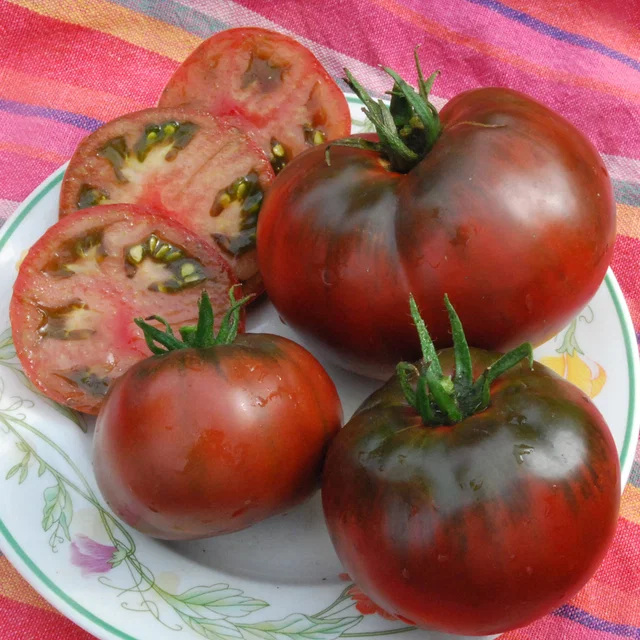
Description
Heirloom / Heritage – Open-Pollinated – Self-Pollinating – Inderteminate
The Black Prince tomato is a distinguished Russian heirloom variety, originating from the Irkutsk region of Siberia. While it was widely grown throughout the former Soviet Union by at least the 1980s, its introduction to the North American market is credited to Nichols Garden Nursery around 1994, after the seeds were brought to the U.S. by gardeners in the early 1990s. As an open-pollinated variety, it is a stable heirloom that has garnered a loyal following for its unique appearance and complex flavor profile.
Basics
- Common Name: Black Prince Tomato
- Scientific Name: Solanum lycopersicum ‘Black Prince’
- Plant Type: annual, warm-season, open-pollinating, self-pollinated, indeterminates
Plant Details
- Plant height: 120–180 cm / 48–72 in
- Plant spread: 60–90 cm / 24–36 in
- Germination Period: 5–14 days
- Transplant spacing: 60–90 cm / 24–36 in
- Row spacing: 90–120 cm / 36–48 in
- Seed sowing depth: 0.3–0.6 cm / 1/8–1/4 in
- Days to Maturity: 70–80 days after transplanting
- Fruit Size: 5-9 cm / 2-3.5 in – 55-140 g / 2-5 oz
- Soil type: Fertile, well-drained, pH 6.0–7.0
- Sun Conditions: Full Sun (at least 6 hours)
- Ideal Container size: 20–40 liters / 5–10 gallons
Growing Tips & Notes
Black Prince is an indeterminate, vining tomato, meaning it requires active management throughout the growing season.
- Support: These vigorous plants need sturdy support, such as cages, stakes, or trellises, to keep the vines off the ground and improve air circulation, which is crucial for disease prevention.
- Conditions: Plant in full sun (6–8 hours daily). They prefer fertile, well-draining soil with a pH between 6.0 and 6.8.
- Watering: Consistent soil moisture is vital for healthy fruit development. Water deeply and regularly at the base of the plant to avoid wetting the foliage, which helps prevent fungal issues like blight.
- Adaptability: Known for its Siberian heritage, Black Prince is generally quite adaptable and can perform well in cooler, shorter-season climates compared to many other tomato varieties.
Harvesting Time & Procedure
Black Prince is often categorized as an early-to-midseason variety, typically ready for harvest around 70–80 days after transplanting, though exact timing can vary by climate.
- Indicators: The fruit is ready to pick when it develops a deep mahogany, garnet, or dark brown color. The shoulders may remain slightly darker.
- Harvesting: Test for ripeness by gently squeezing the tomato; it should feel slightly soft. Use pruning shears to snip the stem just above the fruit or gently twist the fruit upward until it snaps off the vine cleanly.
Various Uses
The Black Prince is prized for its exceptional flavor and versatility in the kitchen.
- Culinary: It is renowned for its rich, sweet, and fruity flavor profile with a slight “salty” complexity that is characteristic of many “black” or dark-colored tomatoes. They are excellent for fresh eating, slicing, and adding a unique visual appeal to salads and caprese dishes due to their deep, dark mahogany interior. They also work well in sauces, where their rich flavor really shines.
- Nutritional/Medicinal: Like other tomatoes, Black Prince is a valuable source of essential vitamins (notably A and C), potassium, and dietary fiber. Its dark color is an indicator of higher levels of anthocyanins—antioxidants also found in blueberries—which contribute to its nutritional profile and potential health benefits.
- Safety Note: Please remember that while the fruit is safe and healthy, the leaves, stems, and foliage of the tomato plant contain solanine, a toxic compound. These plant parts should not be consumed.
Seed Processing & Storage
As an open-pollinated heirloom variety, Black Prince seeds can be saved and will produce plants that are “true to type,” meaning they will look and taste exactly like the parent plant, provided they were not cross-pollinated by a different tomato variety during the growing season.
- Processing: Harvest seeds from fully ripe, healthy fruits. Scoop the seeds and surrounding pulp into a small glass jar with a little water. Place the jar in a warm spot for 2–4 days to allow fermentation to occur, which breaks down the germination-inhibiting gel around the seeds. Once a layer of mold forms, fill the jar with more water, allow the good seeds to sink to the bottom, and pour off the pulp and debris. Rinse until the water is clear, then spread the seeds on a paper plate or screen to dry completely out of direct sunlight.
- Storage: Once fully dry, store your seeds in an airtight container (like a glass jar or a sealed envelope) in a cool, dark, and dry environment. Properly stored seeds can remain viable for several years.



