
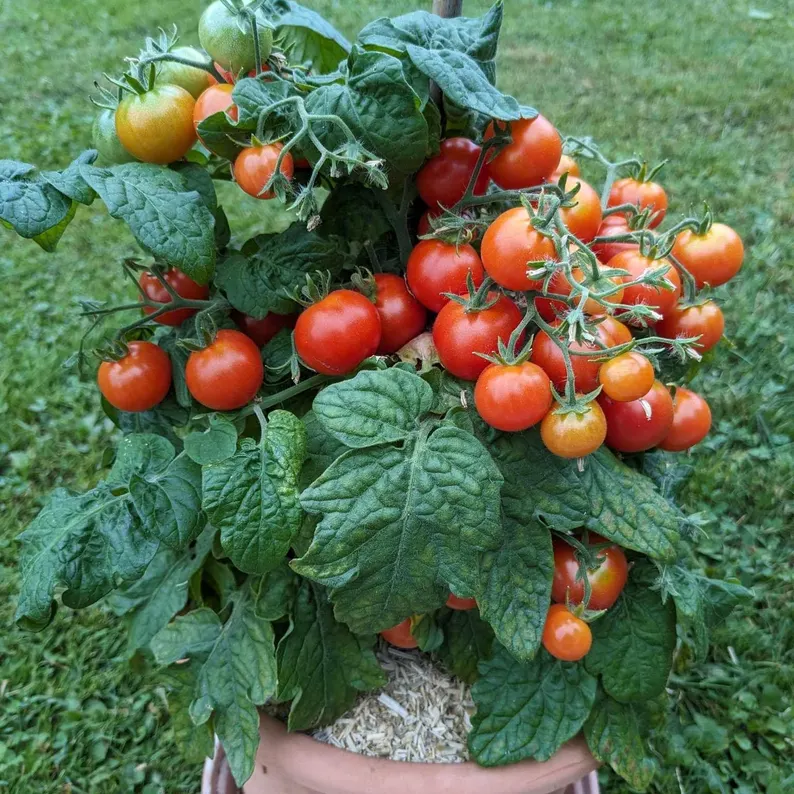
Description
Heirloom / Heritage – Non-GMO – Open-Pollinated – Self-Pollinating – Determinate – Micro-Dwarf
“Little Red Riding Hood” is an English translation commonly used for two distinct tomato varieties: the German Rotkäppchen and the Russian Krasnaya Shapochka. When purchasing seeds, it is important to check the packet to determine which specific cultivar you have.
- German Rotkäppchen: This is the historically documented variety, first mentioned in the German gardening journal Gartenwelt in 1920. Gardener Georg Bornemann is sometimes suggested as the breeder, though this is uncertain. It became widely known through the seed catalogs of the Quedlinburg firm Dippe and was also frequently sold as “Heinemanns Rotkäppchen.” It is an open-pollinated, determinate bush tomato heirloom. This is what we offer.
- Russian Krasnaya Shapochka: This is a separate, more modern variety, often developed for cold-climate container gardening. Sources indicate a version developed by the Russian seed company POISK was entered into the Russian state register in 2011. It is also an open-pollinated, compact determinate variety.
Both are widely valued as open-pollinated micro-dwarf or compact determinate plants, making them ideal for small-space and container gardening.
Common Name: Little Red Riding Hood Cherry Tomato aka Rotkäppchen
Scientific Name: Solanum lycopersicum ‘Little Red Riding Hood’
Plant Type: warm-season, annual, open-pollinating, self-pollinated, compact, determinates, micro, dwarf
Growing Specifications
- Plant Height: 30–45 cm / 12–18 in
- Plant Spread: 30–45 cm / 12–18 in
- Germination Period: 7–14 days
- Transplant Spacing: 30–45 cm / 12–18 in
- Row Spacing: 60–76 cm / 24–30 in
- Seed Sowing Depth: 0.5–1 cm / 0.25-0.5 in
- Days to Maturity: Approximately 55–65 days from transplanting
- Fruit Size: 2-2.5 cm / 0.8-1 in – 30-70 g / 1-2.5 oz
- Soil Type: Fertile, well-drained loam enriched with compost; ideal pH 6.0–6.8
- Sun Conditions: Full sun; 6–8+ hours of direct sunlight daily
- Ideal Container Size: 4-12 litres / 1-3 gallons
Growing Tips & Notes
As determinate, compact plants, these varieties are exceptionally well-suited for containers, hanging baskets, and small patios.
- Containers: A 3 to 5-gallon container with good drainage is sufficient.
- Support: Although they are “bush” or “dwarf” varieties, they can still become top-heavy when laden with fruit. A small stake or a compact tomato cage is recommended to keep the fruit off the soil and prevent the branches from bending or breaking.
- Light: Provide at least 6–8 hours of direct sunlight daily.
- Watering: Keep the soil consistently moist but never waterlogged. Containers dry out faster than the ground, so check the soil moisture daily.
- Safety Warning: Please note that while the fruit is delicious, all other parts of the tomato plant (leaves, stems, and vines) contain solanine and are toxic if ingested. Keep these plants away from pets and small children.
Harvesting Time & Procedure
Both versions of this tomato are typically early-maturing, often ready for harvest within 60–70 days after transplanting.
- Procedure: Monitor the fruit closely as it ripens. The tomatoes are ready when they have reached a uniform, vibrant red color and feel slightly soft to the touch.
- Technique: To avoid damaging the fragile, compact branches of these dwarf plants, do not pull the fruit off by hand. Instead, use clean garden snips or scissors to cut the stem just above the fruit calyx.
Various Uses
The “Little Red Riding Hood” types produce classic, salad-sized red tomatoes with a balanced, sweet-tangy flavor.
- Culinary: These are versatile kitchen staples. They are excellent for fresh eating right off the plant, slicing into salads, adding to pasta dishes, or using in fresh salsas. Because they are early-maturing, they provide a great “first harvest” of the season.
- Nutritional Benefits: Like all red tomatoes, these are a rich source of lycopene, a potent antioxidant associated with heart health and skin protection. They also provide significant amounts of Vitamin C, Vitamin A, and potassium, which support immune function and healthy vision.
Seed Processing & Storage
Because both the German Rotkäppchen and Russian Krasnaya Shapochka are open-pollinated varieties, they will produce seeds that grow “true to type” if the plant was not cross-pollinated by a different tomato variety.
- Processing:
- Selection: Choose the healthiest, most fully ripe tomatoes from your best-performing plant.
- Extraction: Slice the tomato and squeeze the seeds and surrounding gel into a small glass jar or plastic container.
- Fermentation: Add a small amount of water to the container and cover it loosely. Let it sit in a warm spot for 2–4 days until a layer of mold forms on top. This process breaks down the germination-inhibiting gel surrounding the seeds and kills certain seed-borne diseases.
- Cleaning: Fill the jar with water, let the heavy, viable seeds sink to the bottom, and carefully pour off the moldy pulp and floating debris. Repeat until the water is clear and only clean seeds remain at the bottom.
- Drying: Spread the seeds in a single layer on a paper towel, coffee filter, or glass plate. Let them air-dry completely in a well-ventilated area away from direct sunlight for at least a week.
- Storage: Once fully dry, place the seeds in an airtight envelope or small jar. Label with the variety name and date. Store in a cool, dark, and dry place (such as a refrigerator or a cool pantry). Properly stored, these seeds can remain viable for 5–10 years.



