
Description
Heirloom / Heritage – Open-Pollinated – Self-Pollinating – Indeterminate
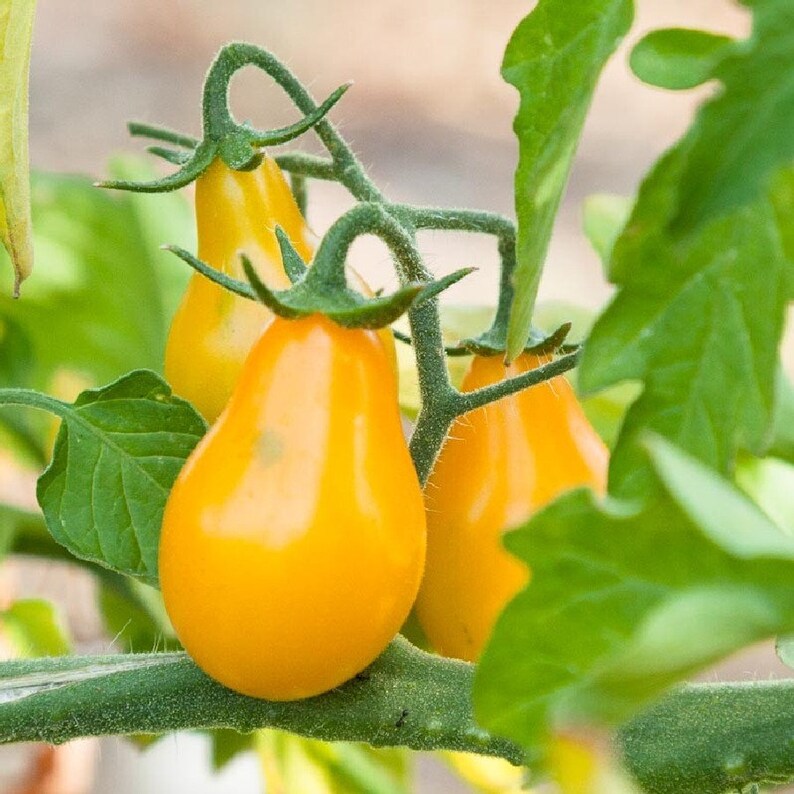
The Yellow Pear tomato is a classic, indeterminate heirloom variety cherished for its prolific yields of small, bright-yellow, pear-shaped fruit. It is an open-pollinated variety, meaning that if isolated from other tomato varieties to prevent cross-pollination, seeds saved from its fruit will grow “true-to-type” year after year. While often dated to records in Europe as early as 1805, this variety became widely established in the United States by the mid-19th century. Due to its long history, “Yellow Pear” can sometimes refer to a general fruit shape, and multiple distinct named lines exist, though most share these iconic characteristics.
Basics
- Common Name: Yellow Pear Tomato
- Scientific Name: Solanum lycopersicum ‘Yellow Pear’
- Plant Type:annual, warm-season, open-pollinated, self-pollinating, indeterminate
Plant Details
- Plant height: 180–240 cm / 6–8 ft
- Plant spread: 60–90 cm / 24–36 in
- Germination Period: 7–14 days
- Transplant spacing: 60–90 cm / 24–36 in
- Row spacing: 90–120 cm / 3–4 ft
- Seed sowing depth: 0.5 cm / 0.25 in
- Days to Maturity: 70–80 days (from transplant)
- Fruit Size: 4-5 cm / 1.5-2 in – 20-28 g / 0.75-1 oz
- Soil type: Fertile, well-drained, slightly acidic
- Sun Conditions: Full sun (6–8+ hours)
- Ideal Container size: 20–28 litres / 5–7 gallons
Growing Tips & Notes
As an indeterminate variety, Yellow Pear plants are vigorous, sprawling vines that will continue to grow, flower, and set fruit throughout the entire season until killed by frost.
- Support: Because they can grow several feet tall and bear heavy clusters, they require sturdy support such as a tall trellis, heavy-duty cage, or deep staking.
- Sun & Soil: Plant in a spot receiving full sun (at least 6–8 hours daily) in warm, well-drained, fertile soil.
- Planting: When transplanting into the garden after all danger of frost has passed, bury a portion of the stem to encourage a deeper, more robust root system.
- Care: Water consistently at the base of the plant to avoid wetting the foliage, which helps prevent disease. Applying organic mulch around the base conserves soil moisture and prevents soil-borne pathogens from splashing onto the leaves during rain or watering. Avoid excessive nitrogen, which can lead to lush leafy growth at the expense of fruit production.
- Safety Warning: As with all tomatoes, the foliage and stems contain solanine, a glycoalkaloid. They are toxic if ingested and should never be used in cooking or consumed by humans or pets.
Harvesting Time & Procedure
Yellow Pear tomatoes typically reach maturity in 70–80 days after transplanting. Because they produce fruit in dense, abundant clusters, it is important to monitor the vines frequently, especially during warm weather when ripening accelerates. Harvest fruits when they are fully yellow and yield slightly to gentle pressure. To avoid damaging the plant, it is best to snip the clusters with scissors or hand-prune the individual fruits rather than pulling them, which can break fragile stems. If frost is threatened, green fruits that have begun to turn color can be brought indoors to finish ripening in a warm, dark place.
Various Uses
Yellow Pear tomatoes are highly versatile in the kitchen due to their mild, tangy-sweet flavor and firm, snackable texture.
- Culinary: They are exceptional for fresh eating, adding a pop of color and sweetness to salads, or as an appealing addition to crudité platters. They are also excellent when roasted to intensify their flavor, used in salsas, or preserved as a unique tomato jam. Their abundance makes them suitable for drying, which concentrates their sweetness for use in pasta or pizza toppings.
- Nutritional: Like most tomatoes, they are a good source of vitamins A and C, as well as essential antioxidants like lycopene and beta-carotene, which support immune function and cellular health.
Seed Processing & Storage
Because Yellow Pear is an open-pollinated heirloom, it is an excellent candidate for seed saving. To ensure the highest quality seeds, select fruits from your healthiest, most productive plants.
- Fermentation: Cut the fully ripe fruit and scoop the seeds and surrounding gel into a small glass jar. Add a small amount of water if necessary.
- Wait: Cover the jar loosely with a paper towel or cloth and leave it at room temperature for 1–4 days. During this time, the mixture will ferment, which helps break down the germination-inhibiting gel coating around the seeds and kills certain seed-borne pathogens.
- Clean: Once you see a layer of mold or debris on top, add more water, stir, and allow the viable seeds to settle to the bottom. Carefully pour off the pulp and floating debris. Repeat this rinsing process until only clean, heavy seeds remain at the bottom of the jar.
- Dry: Strain the clean seeds and spread them in a single layer on a glass or ceramic plate (avoid paper, as seeds may stick). Let them dry completely in a well-ventilated, shady area for several days.
- Store: Once thoroughly dry, label them with the variety and date, and store them in an airtight container in a cool, dark, and dry location. They can remain viable for several years under ideal conditions.



